Antes de transcrever a resenha deste trabalho, gostaria de fazer uma pequena introdução sobre o selo Godless Records. Baseado na capital catarinense há 26 anos, o selo foi bastante ativo durante os anos 1990. Após um período de hiato, retornou com força total graças ao seu idealizador, Otávio De Sades.
O selo está focado em resgatar artefatos lançados na maldita década de 1990 que, por motivos diversos, seja por força maior ou obra do destino, não tiveram muita visibilidade e acabaram esquecidos nas profundezas do underground.
Isso ocorreu por vários fatores: era uma época em que tudo era mais difícil para gravar e distribuir materiais pelos correios, além de muitas bandas encerrarem suas atividades prematuramente, deixando para trás obras que não receberam a atenção e o reconhecimento merecidos no cenário daquela época.
De Sades vem resgatando esses materiais, principalmente aqueles lançados originalmente em formatos como demo tape ou EP, que ficaram perdidos no tempo e no espaço. Agora, estão sendo relançados e ganhando novas edições sem perder aquela aura crua, tosca e primitiva que caracteriza esse tipo de lançamento.
Feita essa introdução, vamos falar sobre este trabalho clássico da Geburah, originalmente lançado em demo tape e que marcou a cena do metal negro catarinense no final dos anos 1990.
A banda foi formada em Florianópolis por volta de 1996 ou 1997, se não me engano. A Geburah lançou esta demo tape no final dos anos 1990, e Blasphemy também ganhou uma versão em CD-R em setembro de 2000, pelo mesmo selo. Em 2025, o material recebeu um relançamento limitado com uma nova arte gráfica, resgatando assim um tesouro do underground catarinense para as novas gerações.
Agathion Anabergo (vocal), Kalifax (bateria), Marthym Sacroner (baixo) e Paymon (guitarra) gravaram Blasphemy na raça, com paixão e dedicação à suprema arte negra. Este artefato bélico é composto por sete hinos negros: Loucifer, The Evil Arise, Master of Pain, Darkness, Bishop of Infamy, Blasphemy e Garden Poetic of Black.
Todas as faixas são carregadas de um sentimento negro e blasfemo, apresentando composições simples, diretas e honestas. Este relançamento resgata uma época que não existe mais e que jamais voltará. Não sei se isso é algo positivo ou negativo. O fato é que tudo muda o tempo todo.
Essa é a parte boa: a arte permanece para sempre. Por isso, é importante preservar o artefato físico, que eterniza a banda e uma época que ajudou a pavimentar os caminhos do submundo.
O som da Geburah é aquele black metal simples, sem firulas, excessos ou técnicas plastificadas tão comuns nos dias atuais. A banda nos entrega um metal negro repleto de paixão e devoção. É cru, visceral, intenso, agressivo, blasfemo e contestador.
Musicalmente, o som é uma mescla das escolas norueguesa e helênica. Da primeira, absorve os riffs pesados e cortantes; da segunda, a atmosfera sombria e envolvente. O resultado apresenta riffs simples, uma ambiência obscura e fria, além de passagens ríspidas que alternam momentos velozes com andamentos mais cadenciados, sempre acompanhados por vocais rasgados e carregados de desespero.
Não vou destacar uma ou outra faixa, pois este trabalho deve ser apreciado como um registro de uma época em que aqueles que a viveram sabem o quanto tudo era difícil. A gravação possui boa qualidade, especialmente considerando as limitações técnicas e estruturais do período.
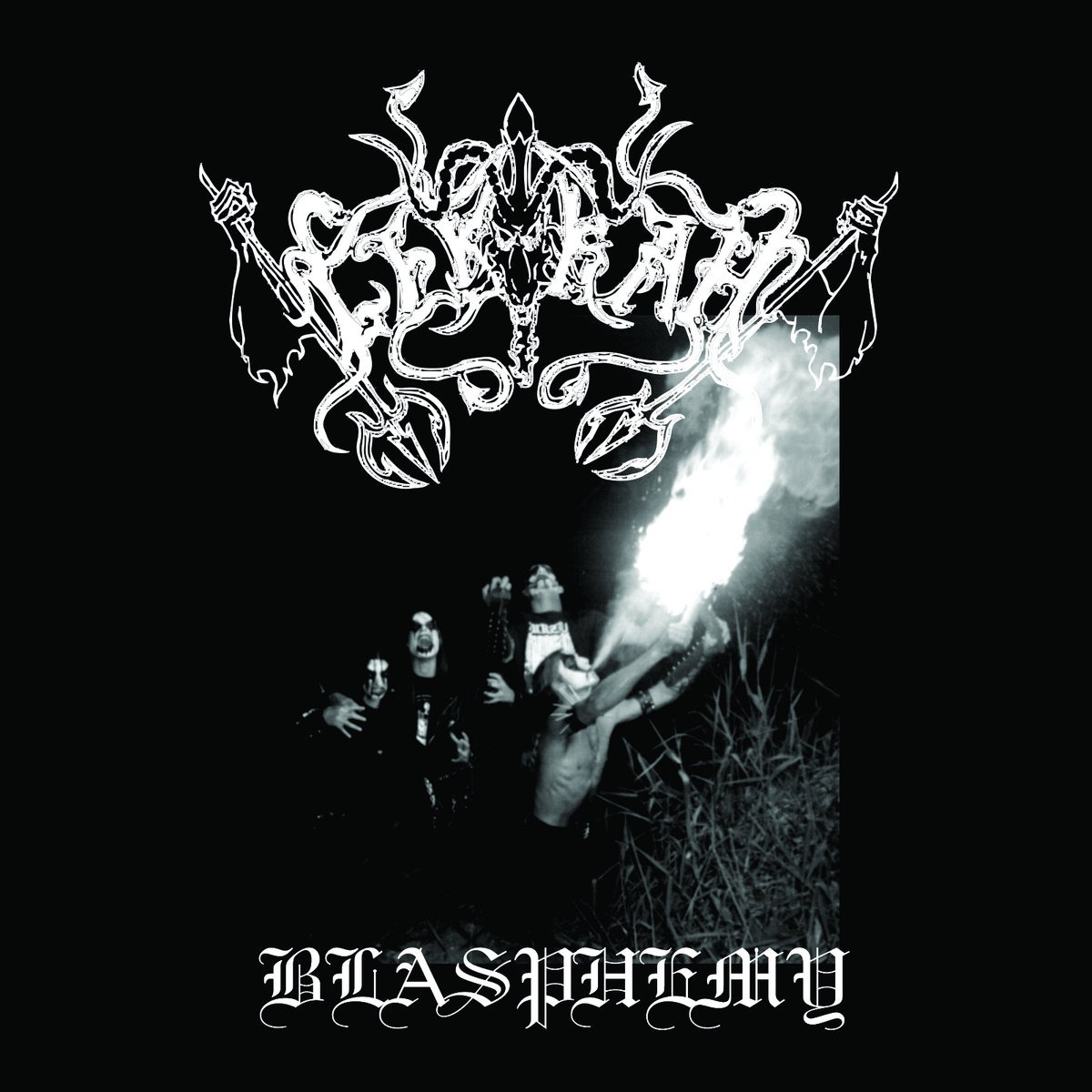
A arte e o layout foram desenvolvidos por De Sades, seguindo uma proposta simples e objetiva, contendo apenas as informações essenciais. A própria capa remete imediatamente aos velhos tempos, trazendo uma fotografia dos integrantes com corpse paint em preto e branco, posicionados em uma floresta durante a noite e cuspindo fogo — uma imagem extremamente comum entre as bandas daquela época.
Parabéns ao selo Godless Records por trazer de volta este importante artefato para as novas gerações e, de certa forma, prestar uma homenagem aos guerreiros da Geburah que já não estão mais entre nós. Em 2003, o guitarrista Paymon nos deixou precocemente e, em 2025, foi a vez de Kalifax.
Entrem em contato com o selo e adquiram este artefato, que resgata uma época gloriosa do black metal nacional. O mal se levanta! Lúcifer, o mestre da escuridão!
Hail Geburah!
A/c: https://godlessrecords.bandcamp.com/
ENGLISH VERSION:
Before transcribing the review of this release, I would like to make a brief introduction to Godless Records. Based in the capital of Santa Catarina for 26 years, the label was very active throughout the 1990s. After a period of hiatus, it returned in full force thanks to its founder, Otávio De Sades. The label is focused on rescuing artifacts released during the cursed 1990s that, for various reasons—whether due to circumstances beyond their control or simply fate—never received much visibility and ended up forgotten in the depths of the underground.
This happened for several reasons: it was a time when everything was much more difficult when it came to recording and distributing releases through the mail, and many bands also ended their activities prematurely, leaving behind works that never received the attention and recognition they deserved within the scene of that era. De Sades has been recovering these materials, especially those originally released as demo tapes or EPs, which were lost in time and space. They are now being reissued and given new editions without losing that raw, crude, and primitive aura that characterizes this type of release. With that introduction out of the way, let’s talk about this classic work by Geburah, originally released as a demo tape and one that left its mark on the black metal scene of Santa Catarina in the late 1990s. The band was formed in Florianópolis around 1996 or 1997, if I am not mistaken. Geburah released this demo tape in the late 1990s, and Blasphemy also received a CD-R version in September 2000 through the same label.
In 2025, the material received a limited reissue featuring new artwork, thus rescuing a treasure of the Santa Catarina underground for new generations. Agathion Anabergo (vocals), Kalifax (drums), Marthym Sacroner (bass), and Paymon (guitar) recorded Blasphemy through sheer determination, passion, and dedication to the supreme black art. This warlike artifact is composed of seven black hymns: Loucifer, The Evil Arise, Master of Pain, Darkness, Bishop of Infamy, Blasphemy, and Garden Poetic of Black. All tracks are filled with a dark and blasphemous spirit, presenting simple, direct, and honest compositions. This reissue rescues an era that no longer exists and will never return. I do not know whether that is a good thing or a bad thing. The fact is that everything changes all the time. That is the positive side: art remains forever. That is why it is important to preserve the physical artifact, which immortalizes both the band and an era that helped pave the paths of the underworld. Geburah’s sound is that straightforward black metal style, free from gimmicks, excesses, or the plasticized techniques so common nowadays.
The band delivers black metal filled with passion and devotion. It is raw, visceral, intense, aggressive, blasphemous, and defiant. Musically, the sound is a blend of the Norwegian and Hellenic schools. From the former come the heavy, cutting riffs; from the latter, the dark and immersive atmosphere. The result features simple riffs, a cold and obscure ambiance, and harsh passages that alternate between fast-paced sections and slower, more deliberate tempos, all accompanied by desperate, rasping vocals. I will not single out any particular track, as this work should be appreciated as a document of an era whose survivors know just how difficult everything was.
The recording quality is quite good, especially considering the technical and structural limitations of the time. The artwork and layout were created by De Sades, following a simple and objective approach containing only the essential information. The cover itself immediately evokes the old days, featuring a black-and-white photograph of the members wearing corpse paint, standing in a forest at night and spitting fire—an image that was extremely common among bands of that era. Congratulations to Godless Records for bringing back this important artifact for new generations and, in a way, paying tribute to the warriors of Geburah who are no longer among us.
In 2003, guitarist Paymon left us far too soon, and in 2025 it was Kalifax’s turn. Get in touch with the label and acquire this artifact, which rescues a glorious era of Brazilian black metal. Evil rises! Lucifer, the master of darkness!
Hail Geburah!
About The Author